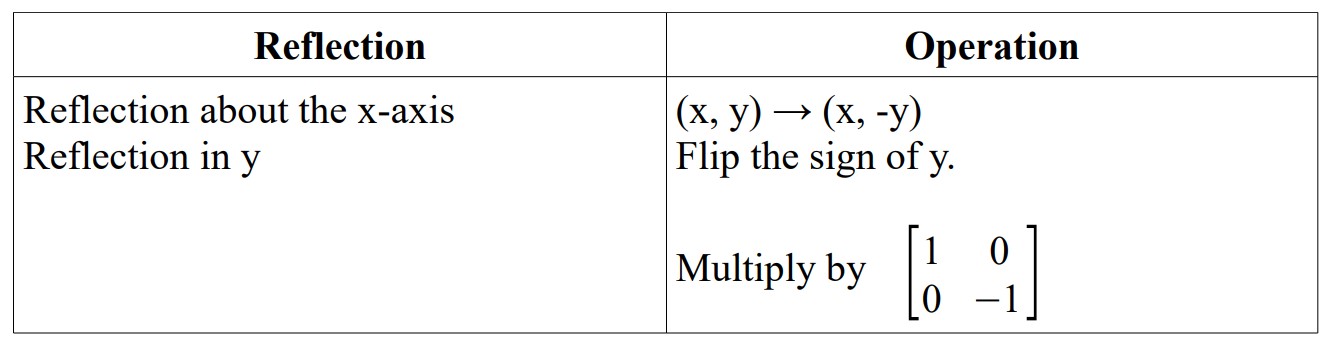
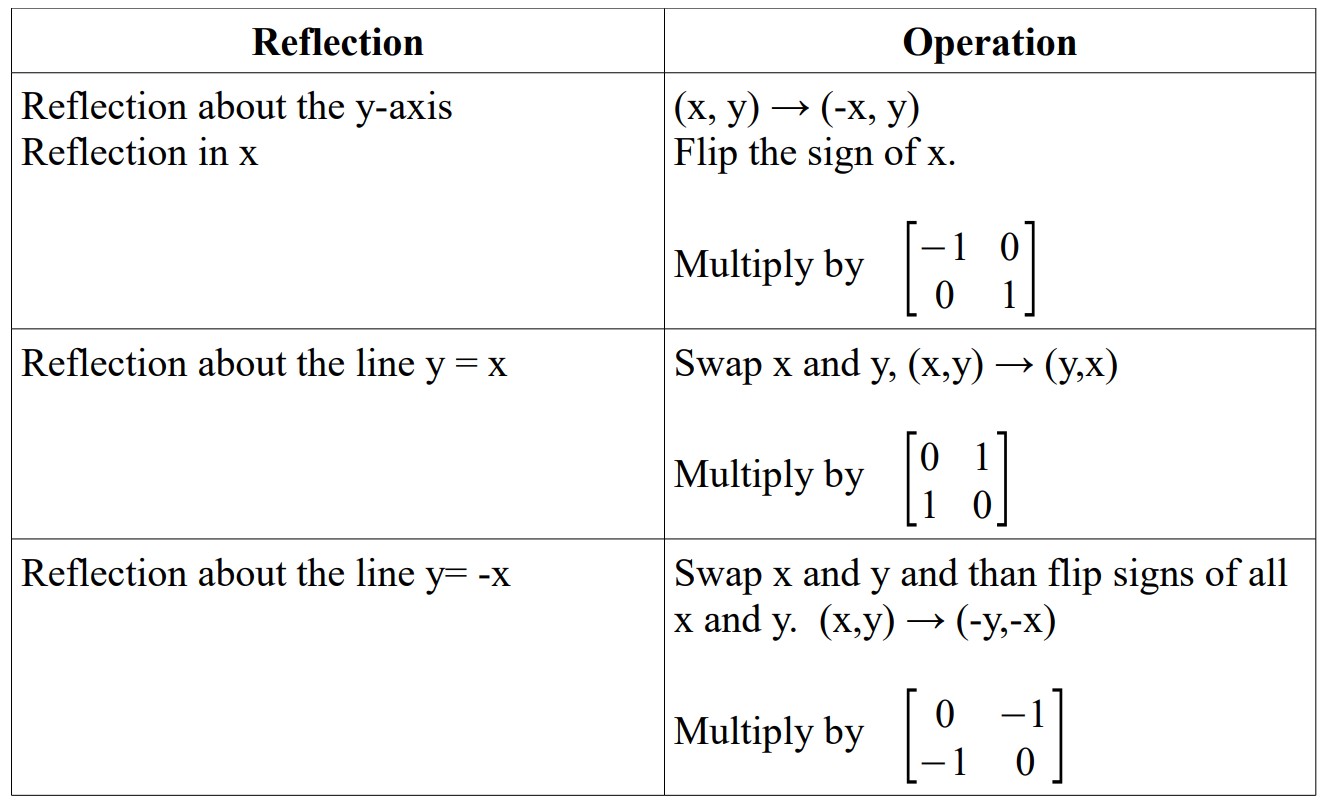
Note: The meaning of ”reflection in x or y” is inconsistent in the texts. Make sure you know what your teacher means my this term.
Note: When multiplying matrices, order matters. The matrix below goes on the left and the coordinate matrix goes on the right. The number of columns in the left, reflection, matrix must match the number of rows in the right, coordinate, matrix.

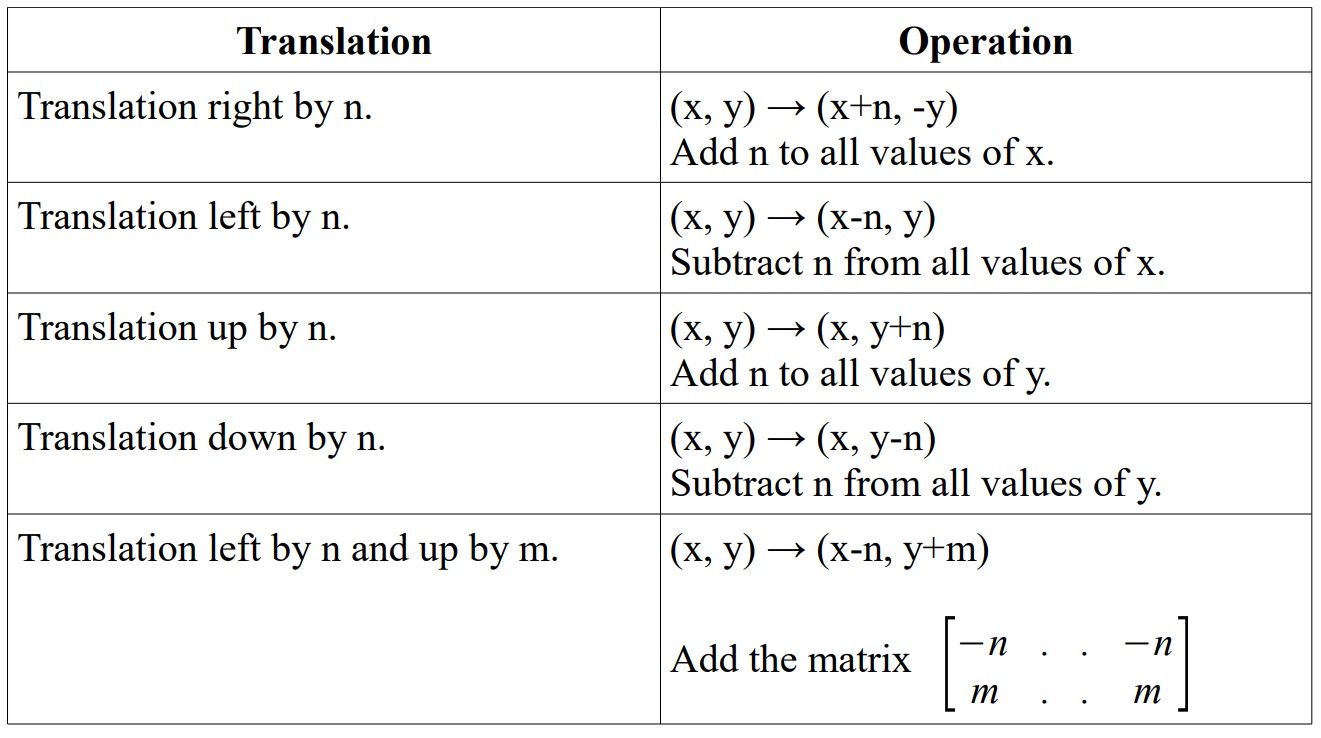
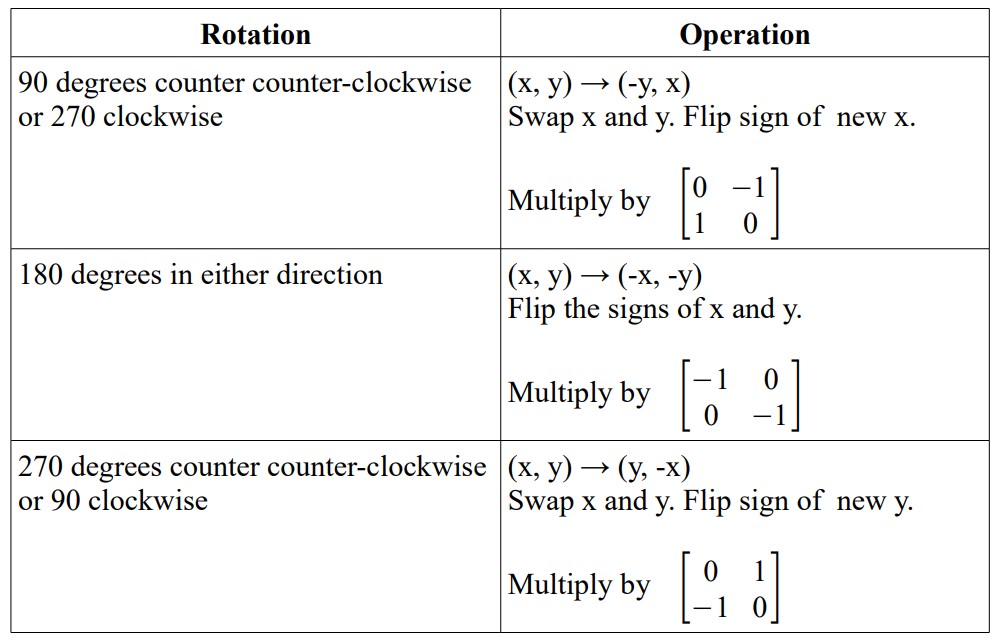
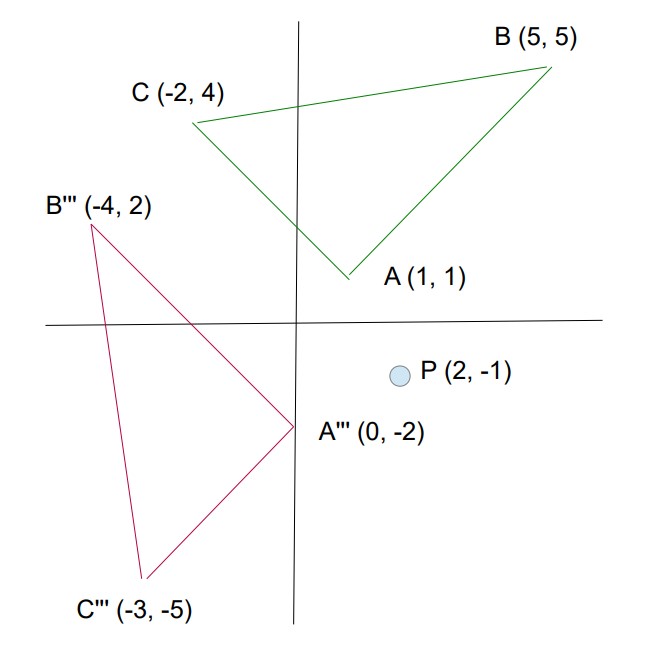

Very clear explanation of coordinate transformations. The logical sequence of translating, rotating, and translating back is presented in a simple and effective way, making complex rotation about an arbitrary point much easier to follow. This is a strong learning reference for anyone studying analytic geometry.
Well explained and mathematically precise. Emphasizing key concepts like matrix order, directional translation, and standard rotation rules helps build a solid conceptual foundation. The worked example provides practical clarity and reinforces understanding of geometric transformations.
Excellent presentation of transformation principles. Highlighting matrix order, coordinate translation, and rotation rules demonstrates strong mathematical clarity. Practical examples like rotating a triangle around a non-origin point greatly improve conceptual understanding and make the topic more accessible for learners.
Clear and well-structured explanation of geometric transformations. The step-by-step breakdown of translation, reflection, and rotation—especially rotation about a point other than the origin—makes the concept much easier to understand. This is a helpful guide for students learning coordinate geometry and matrix-based transformations.